
Socks! We love them. We need them. But have you ever wondered why were they invented in the first place? How have they evolved since then? Keep reading to find out!
Ordinary socks… We not often remember them, as a detail of our daily clothes. Socks and stockings are used for the prevention of damages of feet and to show the social status of their owner. Soldiers, athletes, and monarchs – everyone wore socks, and at some moments their role was quite important.
There isn’t one set recorded date of when the first sock was created but instances of sock-like things are found throughout ancient history. The Ancient Greeks used to wrap their feet with matted animal furs and Romans used to wrap their feet in thick fabric or wear sock-like things made of leather to protect their feet and keep them warm and dry.
Some of the earliest socks were toe socks so people could wear socks with sandals. Fashion faux pas, or Nah? At the time, socks were a thing of necessity, not a fashion statement. As time went on, increasingly advanced knitting methods made it easier to bind the socks.
Going back to the Stone Ages, cca. 5000 BC, the first ‘socks’ that our cavemen ancestors wore probably looked nothing like what we have today. There aren’t any socks left over from that time but we have some clues as to what they might have looked like from cave paintings and archeological finds. It seems like these rudimentary socks were made from animal skins and pelts tied around the ankle.
Fast forward a few thousand years to the 8th century BC when socks are first mentioned in writing by the Greek poet Hesiod. In his poem, “Works and Days”, Hesiod mentions ‘piloi’, a type of sock made from matted animal hair worn under sandals.
Later on, the Romans would wrap their feet in strips of leather or woven fabric. Around the 2nd century AD they started sewing the pieces of fabric together and making fitted socks. They called these ‘udones’ and they are the first socks to resemble what we are wearing today.
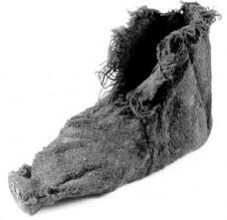
The first woollen socks to be discovered were unearthed at Vindolanda in Northumbria and they date back to the 2nd century AD. They are a child-sized pair made from woven wool cloth meant to protect against the rough British weather. Roman tablets found at the site even include the instruction to “send more socks”.
Also around that time, the first knit socks were being made in Ancient Egypt. The earliest known surviving pair of knitted socks, made with a technique called naalbinding, dates from 300 – 500 AD and was found at Oxyrhynchus on the Nile in Egypt. The socks feature split toes and are designed to be worn with sandals.
By the 5th century AD, holy people of Europe would wear socks called ‘puttees’ which symbolized purity.
The first socks were worn with sandals
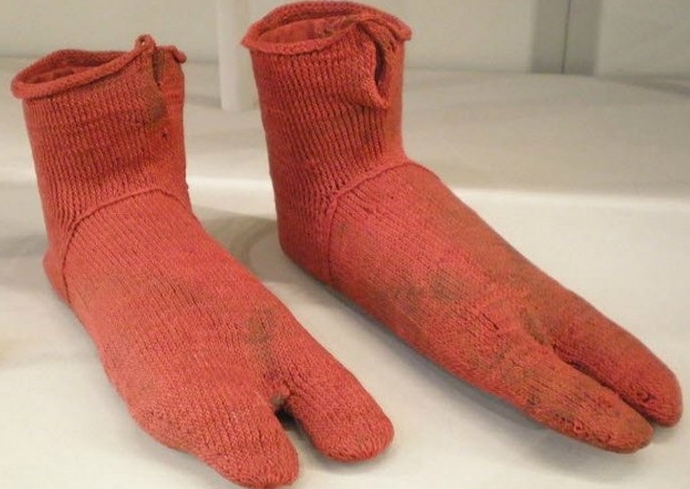
Sandal Socks
How have socks evolved?
As I mentioned earlier, the main reason for creating socks was for protection, warmth, and to keep feet nice and dry to avoid infection. However, by the 11th century, socks became more than just protection; they became status symbols, a symbol of wealth and prestige. Because it wasn’t easy to knit socks and because the method for knitting socks was a guild secret back then, only the wealthy could afford to buy socks.
Today it is considered nasty taste to wear sandals with socks, but for the first time began to wear socks quite so. Though the history of socks is connected generally with the countries with a frigid climate, for 3 – 6 centuries AD, knitted socks carried also in ancient Egypt. Made them of wool, generally bright color, with a section between the first two fingers to carry with sandals. For what – it is unclear, most likely, for appearance.
Romans wore socks with sandals too. In the countries with humid northern climate, such as Great Britain, the Roman soldiers strongly froze and asked to send them more warm socks. From where it became known that socks carried with sandals? At excavation in Great Britain found sandals on which metal details fabric fibers came across.
King Henry VII in the 15th century rocking some fancy knee-highs.
The poor, however, continued using the methods Ancient Greek and Roman people used to keep their feet safe and dry. Back then, people used to wrap some cloth around their legs and use garters to hold them up. Around the same time, men had their socks and pants sewn together because fashion, obviously. A few hundred years later, printed socks of varying length became a big part of fashion.
Unfortunately, they weren’t able to experience Mooshwalks back then. Bummer. In the 16th century, the invention of the loom made it easier to knit socks, making socks more readily available. Although, it wasn’t until the beginning of the 20th century that mass production of socks began. Since then, socks of varying length, style, color, pattern, and so on, have been increasing in popularity. So much so that there are specific stores that are just wall-to-wall socks! How amazing is that? It’s incredible to see the evolution of socks from being a necessity to being an accessory.
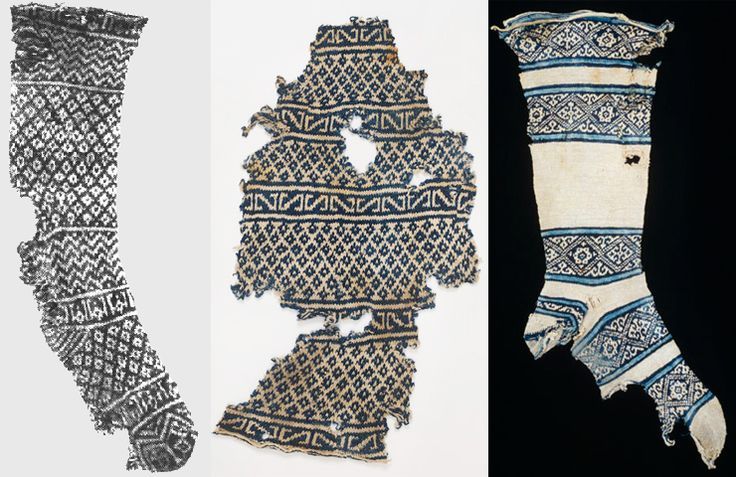
When were Knee High socks invented?
There are things similar to knee-high socks that can be found in ancient history too, surprisingly enough. Ancient Romans used to wrap a piece of cloth around their feet and calves and use leather straps to hold them up. They did this more for warmth than protection; little did they know they would spark a fashion trend. Knee-highs were on and off the scene since then but made a big comeback in the 1920s. However, they didn’t really become a pinnacle part of fashion until the 1960s and has been growing in popularity ever since.

High standards of Queen Elizabeth I slowed down the industrial revolution
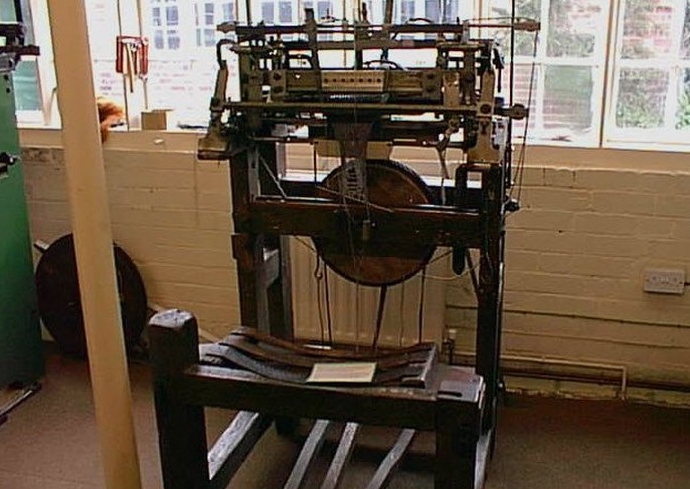
The queen of England very much-loved silk stockings. At that time all stockings, garters, and socks did manually, and they were very expensive. In 1589 William Li invented the weaving loom for the production of stockings. But the sample which is presented to the queen seemed to it shapeless and rough, and it rejected its invention, having referred to the fact that the use of the machine will lead to a reduction of jobs. Then the king of France Henry IV offered financial support to the inventor. Li finally moved to Rouen where he constructed a factory that laid the foundation for mechanization in the textile industry.
Etymology
The modern English word sock is derived from the Old English word socc, meaning “light slipper”. This comes from the Latin soccus, a term to describe a “light, low-heeled shoe” worn by Roman comic actors, and deriving from the Ancient Greek word sykchos.

Fabrication
Socks can be created from a wide variety of materials, such as cotton, wool, nylon, acrylic, polyester, olefins (such as polypropylene), or spandex. To get an increased level of softness other materials that might be used during the process can be silk, bamboo, linen, cashmere, or mohair.[8] The color variety of sock choices can be any color that the designers intend to make the sock upon its creation. Sock ‘coloring’ can come in a wide range of colors. Sometimes art is also put onto socks to increase their appearance. Colored socks may be a key part of the uniforms for sports, allowing players teams to be distinguished when only their legs are clearly visible.
The township-level district of Datang in the city of Zhuji in Zhejiang Province, People’s Republic of China, has become known as Sock City. The town currently produces 8 billion pairs of socks each year, a third of the world’s sock production, effectively creating two pairs of socks for every person on the planet in 2011.
Flip-flops socks
Socks are manufactured in a variety of lengths. Bare or ankle socks extend to the ankle or lower and are often worn casually or for athletic use. Bare socks are designed to create the look of “bare feet” when worn with shoes. Knee-high socks are sometimes associated with formal dress or as being part of a uniform, such as in sports (like football and baseball) or as part of a school’s dress code or youth group’s uniform. Over-the-knee socks or socks that extend higher (thigh-high socks) are today considered female garments. They were widely worn by children, both boys and girls, during the late 19th and early 20th centuries; although, the popularity varied widely from country to country.
Toe socks
A toe sock encases each toe individually the same way a finger is encased in a glove, while other socks have one compartment for the big toe and one for the rest, like a mitten; most notably Japanese tabi. Both of these allow one to wear flip-flops with socks. Leg warmers, which are not typically socks, may be replaced with socks in cold climates.
A business sock is a term for a colored sock for conservative appearance and casual footwear. The term is often used loosely to indicate a term for a conservative office setting. For instance, business socks, business shirts, and business shoes are used for office and job. These socks usually have patterns and are known to be a cause for bleach stains in laundry machines due to their colored manufacturing process and dyed attributes.
Crew socks are short, thick everyday socks usually ribbed at the top of the ankles. They can be used in a way to warm legs. The first familiar practice of crew sock was in 1948. Crew socks are usually unisex.
Low cut sock is a kind of sock that describes in a way to be cut below ankle. Low cut socks are formed to cover the contours of feet. Low cut socks are unisex wearing but women and girls commonly use them. Low cut socks are normally worn with shoes such as boat shoes, oxfords, moccasins, and loafers.
The Ancient Egyptian style of sock is a blend between modern Western socks and Japanese tabi, both of which it predates. Like tabi, Egyptian socks have one compartment for the big toe and another for the rest, permitting their use with sandals; like Western socks, they fit snugly to the foot and do not use fasteners like tabi.
Sizes
Knee-high white socks, often worn as part of a school uniform or for fashion
Although generally holding to a pattern of being divided into sizes of small-medium-large, etc., what range of shoe sizes those sock sizes correspond to carries in different markets.[18] Some size standards are coordinated by standard-setting bodies but others have arisen from custom.[19] Sock lengths vary, from ankle-high to thigh level.
Sports
For the baseball uniform, see Baseball uniform § Stockings and pants.
Most sports will require some sort of sock, usually a tube sock to protect one’s legs from being scraped while participating in sports activities. In basketball, tube socks are worn, and in lacrosse, mid-calf socks are required. In football, knee socks are used. They are mostly to stop grass burns.
Other uses of the word
The layer of leather or other material covering the insole of a shoe is also referred to as a sock. When only part of the insole is covered, leaving the forepart visible, this is known as a half-sock.
Blue stockings
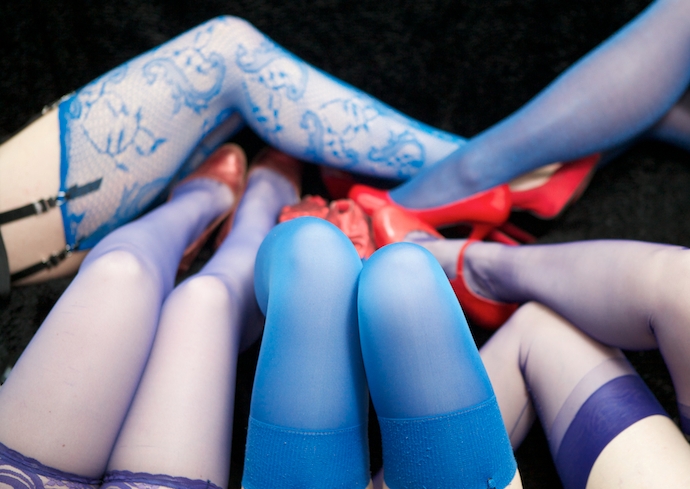
Originally blue stockings made of unpainted, grayish, worsted yarn and carried as daily. They gained the development in 1756 when Benjamin Stilling fleet, having received the invitation from the owner of the salon Elizabeth Vesi, was forced to refuse, having referred to lack of the clothes suitable on etiquette, in particular, of silk white or black stockings. But Elisabeth categorically did not accept his refusal and ordered to come to the usual blue. Two centuries earlier blue stockings of a plot in the day of execution the queen of Scotland, Maria Stewart. Perhaps, it was her call to Elizabeth I, the signed Maria the death sentence. Elizabeth, I loved white silk stockings, and blue stockings at that time were fashionable in France where Maria spent the childhood. Maria’s stockings were light-azure colors, are embroidered with silver thread and with green garters.
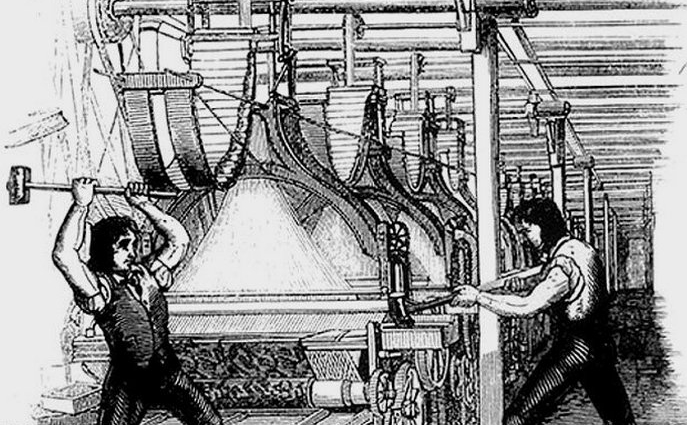
First Luddites where people manufacturing socks
After the invention of the weaving loom William Li, the socks manufacturer began to be afraid to lose work and began to break weaving looms and to burn factories on all Great Britain. Since 1811 they began to unite in groups, gathering for training sessions at night, clashes with the police began. In 1861 the Parliament referred their activity to the crimes punished by the death penalty. Today the term “Luddite” is used concerning participants of performances against the introduction of new technologies.
Sammy Sosa started the career from socks
Samuel Peralta Sosa, the famous baseball player from the Dominican Republic, for seven years, after the death of the father, helped the family casual earnings. In 14 years he made a baseball glove, a bat and the first ball of several socks, having wound them with tape and began to train. In 17 years concluded the first contract with it, further, it played for Chicago “White Sox”, Chicago “Cubs” and Baltimore “Orioles”. Throughout their career, Sammy set several world records for home runs.
Socks won war
In 1777, during the American war of independence, the American soldiers suffered from cold, a lack of food, shortage of socks and footwear. One of the women, Rod Farrend Parsippany, having received from the husband the letter in which he described, in what state there are legs at soldiers, gathered a group of women to knit warm woolen socks. After hundreds of socks were connected, she with the son went to distribute them to soldiers. And 1777-78 became a turning point in the war in favor of Americans.
In time I and of the II World wars many soldiers perished from the so-called trench foot – the necrosis of tissues of legs caused by a long stay in the conditions of excess humidity. It could be prevented easily frequent change of socks that legs remained dry.
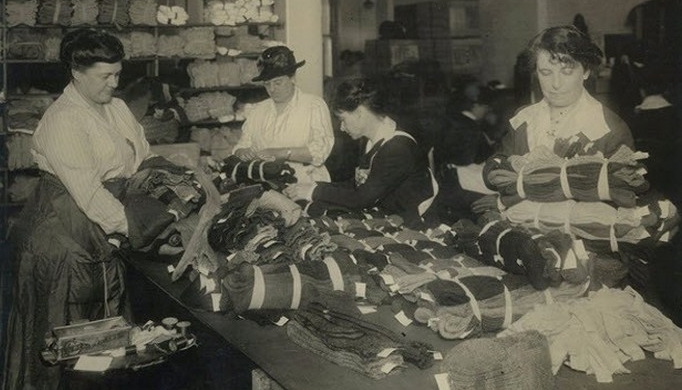
During the I world war the American textile industry could not provide the army properly, and volunteers overall country knitted socks for soldiers in thousands. In the II world war with deliveries, socks of problems were not, but soldiers often did not want to spend time for their change. Finally, the problem was solved by the use of waterproof boots.
Thomas Jefferson socks
The president Thomas Jefferson suffered from many diseases – osteoarthritis, headaches and attacks of diarrhea. Especially strongly diseases were shown in cold season. And during cold weather he always put on the warm socks connected especially for it, numbered and with its initials. That socks wore out not so quickly, in them enclosed dense fabric. Strangely enough, but Jefferson always, even in 75 years, spoke about himself as about very vigorous and strong person. He also claimed that he is not afraid of cold at all, and every day keeps legs in cold water. But, most likely, it was connected with the fact that he just put on warm socks.
In the Jamestown warm socks were required
Manufacture in the 1600s
For the British going to the settlement to the British colony Virginia in North America, it was recommended to take with itself from clothes one hat, three shirts, three-light suits, one vest, one pair of garters, four pairs of shoes and three pairs of silk stockings. But having arrived in 1607 to Jamestown where the climate was much colder, than it was expected, many of colonists could not worry winter of 1609-1610. Quickly there the vessels which delivered everything necessary for survival were sent. Subsequently, the immigrants arriving at the colony carried with themselves warmer clothes and at least four pairs of warm woolen stockings.
The blood-stained sock
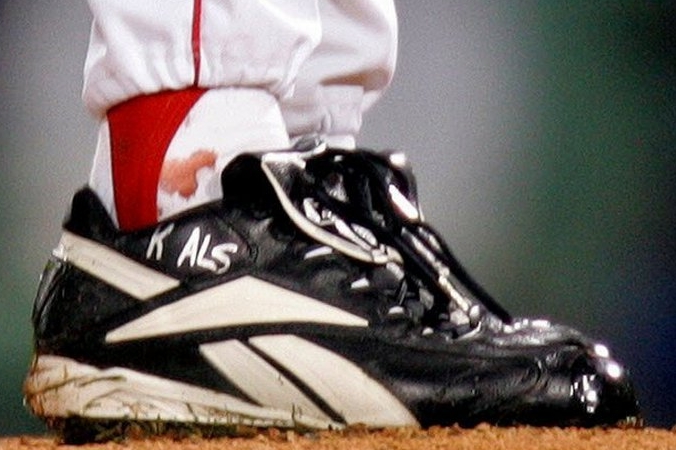
Bloodstained socks
Curt Schilling, the American baseball player who was successfully acting for Red Sox s in 2004-07 helped the team to win World War I a Series in 86 years in spite of the fact that acted with an anklebone injury. For the Game 6 of the Championship of the American league of 2004 surgeons temporarily sewed up his injured sinew. However, during the game blood from a wound filtered through a sock that drew the attention of national media. Long-time disputes on continued whether there was blood noticed on a sock, real. In 2013 this sock was sold at an auction for $92 613.
The shocking Walter Cronkite’s socks
Modern socks
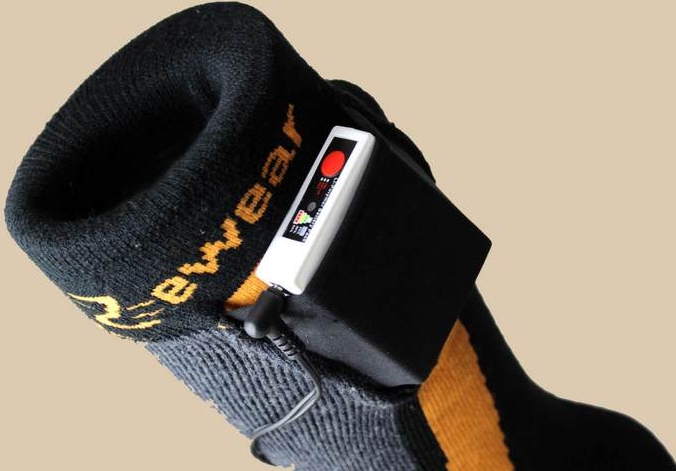
Richard Nixon was the first American president who visited China after the formation of the People’s Republic of China. Its trip across China was thought so carefully over and organized that the reporters and journalists who arrived with him did not receive absolutely any noteworthy material. And they could write only about sticky wooden seats of toilet bowls in the hotel which literally before arrival of guests varnished. Sometimes at the people who were sitting down on them for the first-time skin stuck and was ripped. And about incidents with the TV host Walter Cronkite – on him, there were electric socks with heating. But they worked with failures, and at the most unexpected moments that Cronkite began to shake. Of course, looking at today’s technology might look funny, but it’s true.
A hand-knitted sock
Argyle socks
A sock is a piece of clothing worn on the feet and often covering the ankle or some part of the calf. Some type of shoe or boot is typically worn over socks. In ancient times, socks were made from leather or matted animal hair. In the late 16th century, machine-knit socks were first produced. Until 1800 both hand knitting and machine knitting were used to produce socks, but after 1800, machine knitting became the predominant method.
One of the roles of socks is absorbing perspiration. The foot is among the heaviest producers of sweat in the body, as it can produce over 0.25 US pints (0.12 l) of perspiration per day; socks help to absorb this sweat and draw it to areas where air can evaporate the perspiration. In cold environments, socks made from wool insulate the foot and decrease the risk of frostbite. Socks are worn with sport shoes (typically white-colored socks) and dress shoes (typically dark-colored socks). In addition to the numerous practical roles played by socks, they are also a fashion item, and they are available in myriad colors and patterns.
Striped, hand-knit socks
Foot wraps used by the Finnish Army until the 1990s
Foot wraps, pieces of cloth that are worn wrapped around the feet, were worn with boots before socks became widely available. They remained in use by armies in Eastern Europe until the beginning of the 21st century.
Thermal socks
For use in cold environments, thermal socks are thicker. They are commonly worn for skiing, skating, and other winter sports. They provide not only insulation but also greater padding due to their thickness.
Diabetic socks are kind of thermal sock made from acrylic, cotton, nylon, and elastic. These are made to improve comfort while at the same time keeping feet cool and dry. There is no solid evidence that they are helpful.
Holiday items
Globe icon
The examples and perspective in this section may not represent a worldwide view of the subject. You may improve this section, discuss the issue on the talk page, or create a new article, as appropriate.
A sock is also used as a holiday item during Christmas. Children hang a large ceremonial sock called a Christmas stocking by a nail or hook on Christmas Eve, and then their parents fill it with small presents while the recipients are asleep. According to tradition, Santa Claus brings these presents.
Religion
Among Muslims, socks have initiated a discussion about the intricacies of wudhu, the formal washing carried out before prayer. Some Muslim clerics, mindful of possible hardship among Muslims in inhospitable circumstances, have issued Muslim edicts permitting practicing Muslims to wipe water over their sock or sprinkle their sock. This would allow prayer where there are no seating facilities, or if there is a queue. This is the stated opinion especially of Maliki Sunnis.
Effects
Tight socks can cause hair loss.
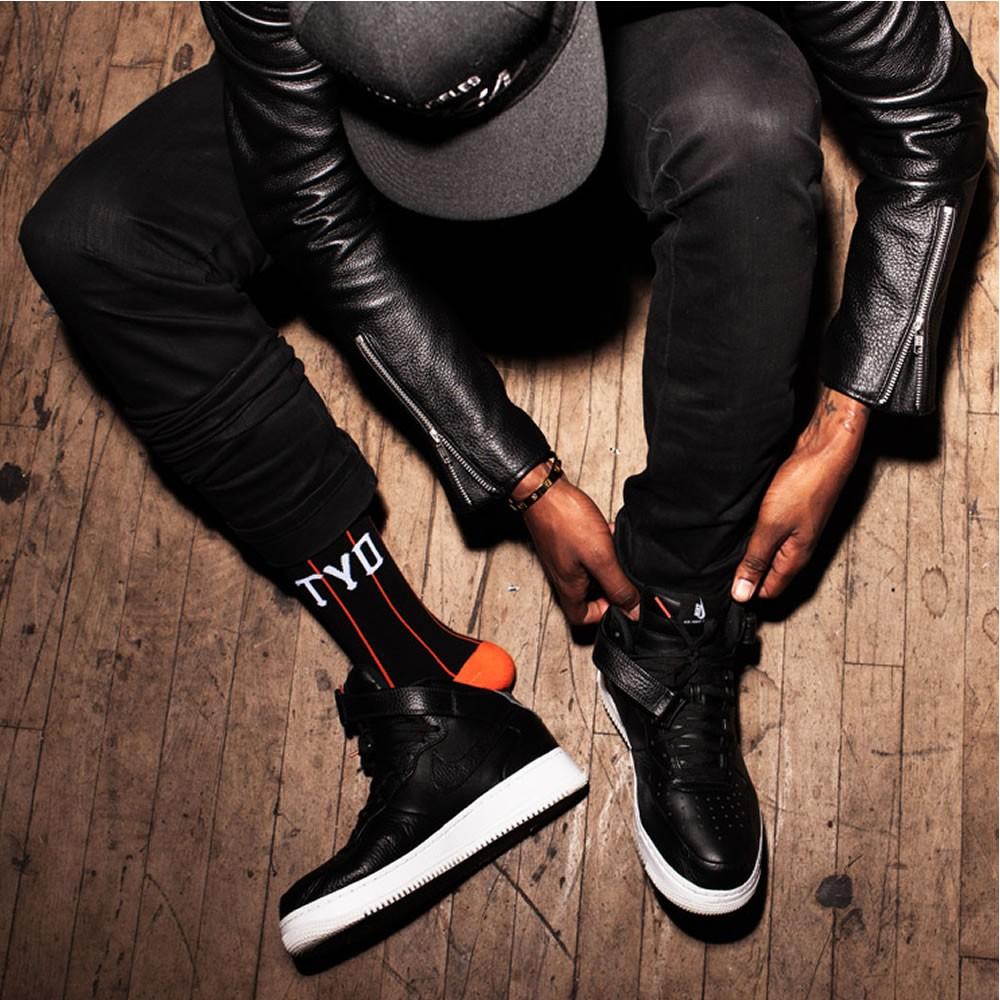
Fast forward to now, a day and age where a lot of people use socks to express their identity. We live in a time where socks are an important part of fashion for people of all ages, genders, races, etc. Because of this, the sock business is on the rise! There are brands, like Stance Socks, that cater to fashionable men and to sneakerheads.
Black Air Force 1’s Mids and Tokyo Stance Socks.
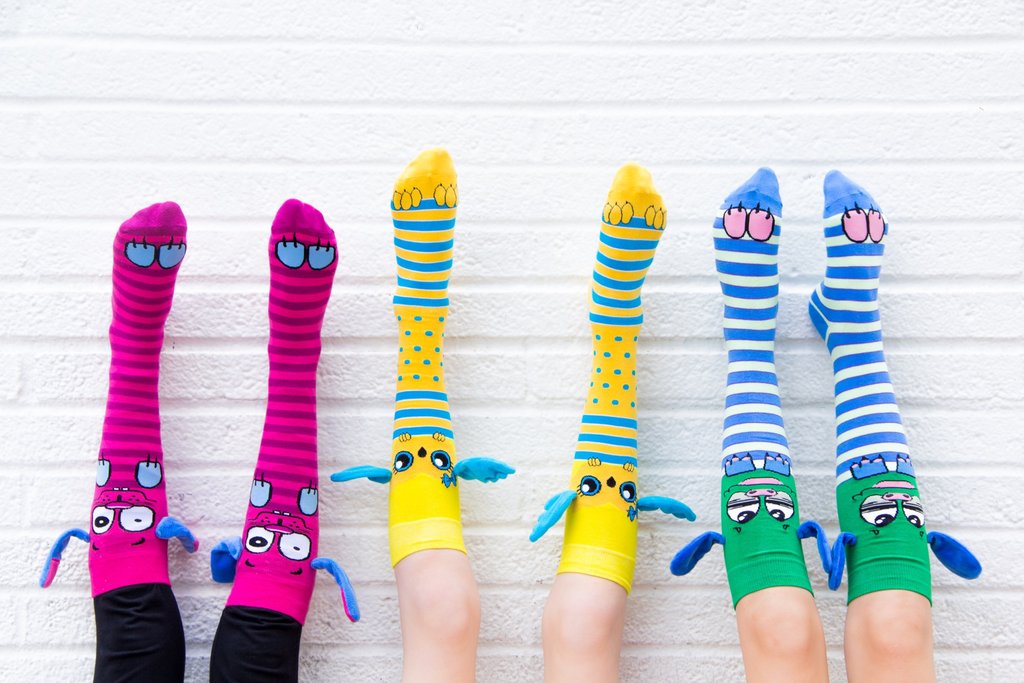
And then, of course, there’s Mooshwalks, the world’s first pair of socks with ears/wings! Each pair of Mooshwalks has its own unique personality, their own story, even their own birthdays!
Moonwalks, socks with ears/wings, personalities, and stories.
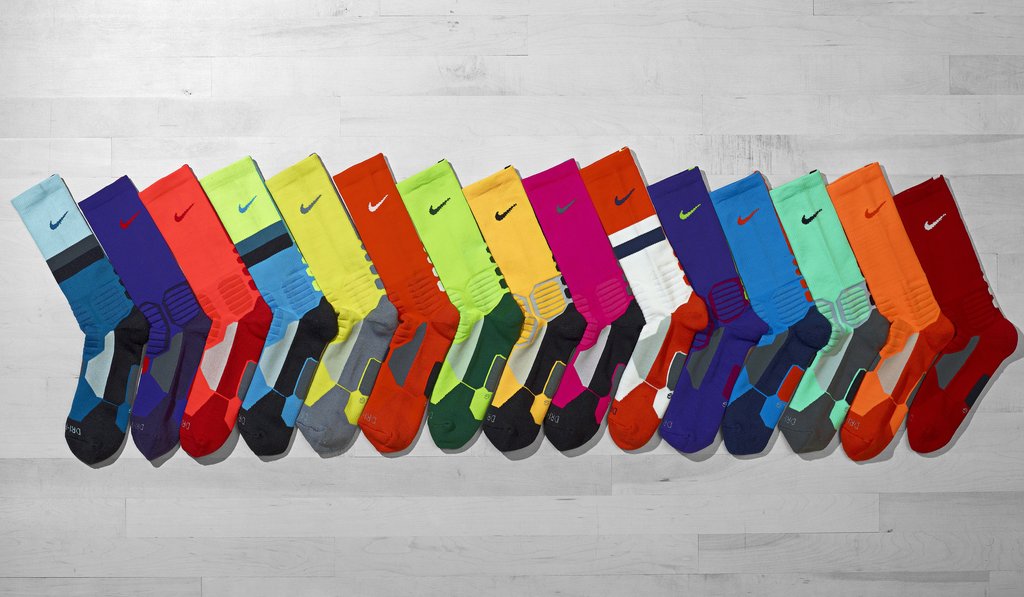
Then there are Nike Elite Socks, one of the highest-rated performance socks. They utilize compression for better blood flow and extra padding in key areas for impact protection, which are ideal features for athletes of every caliber.
Nike Hyper Elite Socks in a range of colors. How much of the history of socks did you know? What are your favorite kinds of socks? If you could design your own socks, what would they look like? Let us know in the comments below!